
The Dining Hall, the Comparisons, the Mirror. Why College Is So Hard on Body Image.
What is actually driving body image struggles in college students, and what genuinely helps beyond telling yourself to feel better
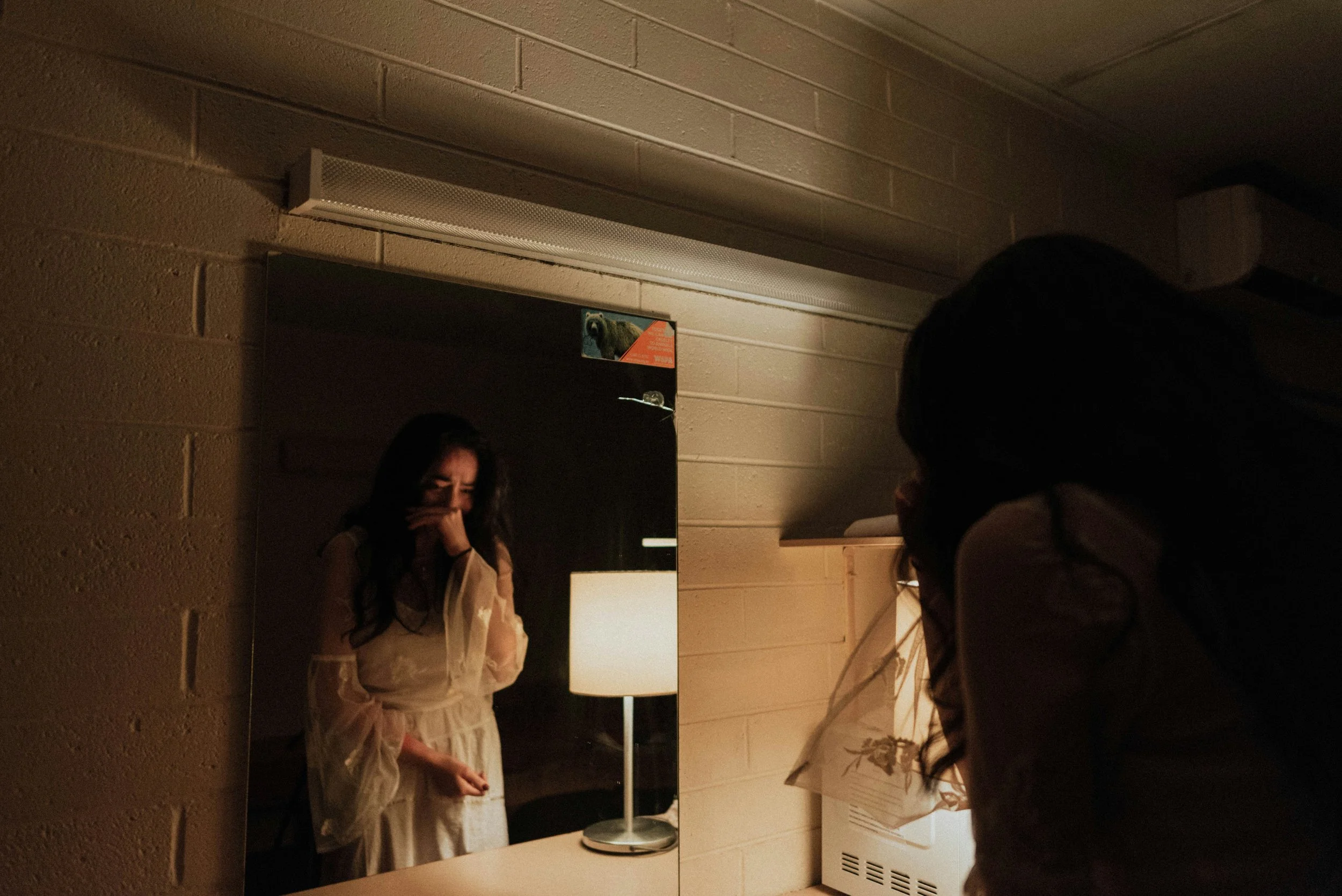
Before college, you had a routine that probably did not require this much conscious thought. You ate at certain times, moved in predictable ways, and the relationship with your body was mostly background noise rather than a daily source of stress. Then you arrived on campus. The dining hall is open at all hours with unlimited food and nowhere to eat it privately. Your movement habits changed overnight. You are living with people your own age who are all highly visible to each other, and social media never turns off.
Somewhere in the middle of all of that, something that was not a major source of distress has become one. And if you have tried telling yourself to just stop worrying about it, you already know that does not work.
Body image struggles in college students are extremely common and often go unaddressed because they fall in the gap between everyday discomfort and clinical eating disorder. At Semester Health, we work with college students navigating body image concerns across the full spectrum. Here is what is actually going on, and what helps.
Why College Specifically Makes Body Image Harder
The dining hall is unlike any eating environment you have been in before
Eating in a dining hall is a fundamentally public act, every time, for every meal. You are choosing food in view of other people, eating in social settings, and often surrounded by conversations about food, weight, working out, and what people are or are not eating. For students with any existing sensitivity around food or their body, that level of constant visibility amplifies self-consciousness in ways that are hard to anticipate until you are in it.
The structure of unlimited access is also genuinely unusual. Most people's previous relationship with food was embedded in routine. Breakfast at a certain time, lunch in a school cafeteria with limited options, dinner at home. The dining hall removes all of that and replaces it with a situation where every decision about eating is conscious, repeated multiple times a day, and happening in front of other people.
Social comparison operates at a scale that is genuinely new
Living with hundreds of people your own age, in an environment where physical appearance is constantly visible and where you are in close proximity to each other in ways that most life stages do not involve, creates conditions that challenge most people's relationship with their body. You are not comparing yourself to a handful of people in your neighborhood or your high school anymore. You are comparing yourself to everyone around you, all the time, in a compressed space.
Add social media to that, and the comparison never ends. You are seeing curated, edited, filtered versions of other people's bodies while you are living in an unedited version of your own. That gap between the performance you see and the reality you live in is genuinely distorting, and it is not something you can just decide to stop doing.
Structure changes and the body responds
Many students who were involved in structured physical activity in high school, sports, PE, regular gym routines, lose that structure when they arrive at college. Exercise, which may have previously been built into the schedule automatically, now requires deliberate choices in an already demanding and unstructured environment. The absence of that routine, combined with significantly changed eating patterns and elevated stress, produces real changes in the body that some students find distressing regardless of whether those changes are medically significant.
Stress and eating become linked in new ways
College stress is significant and food is one of the most accessible coping mechanisms available in a dining hall environment. Using food to manage difficult emotions is an understandable response to a genuinely difficult situation, but it can create cycles of eating, guilt, and restriction that are hard to exit and that meaningfully affect mental health over time. Many students find themselves in these cycles without fully understanding how they got there.
When Body Image Concern Becomes Something to Address
A 2025 study published in Frontiers in Public Health found that physical appearance perfectionism was significantly associated with subthreshold depression in college students, with rates of depressive symptoms reaching 40.8% in that group. The relationship was especially strong for female students and was driven by fear of negative evaluation. The body image concern was not neutral. It was actively producing depressive symptoms in nearly half the students studied.
Signs that your body image concerns have moved into territory worth addressing:
You are avoiding social situations, classes, or activities because of how you feel about your body on a given day
A significant portion of your mental energy each day is spent thinking critically about your appearance
Your mood is substantially shaped by how you feel about your body when you wake up
You are restricting food, eating in ways that feel out of control, or compensating after eating
You cannot identify the last time you felt genuinely neutral or okay about your body
What other people eat, what they look like, or what they say about their own bodies triggers significant distress in you
What Actually Helps
Redirect from appearance to function
One of the most evidence-based shifts in body image work is deliberately and consistently redirecting attention from how your body looks to what your body does. Walks to class, the ability to stay awake through a lecture, hugging people you care about, sleeping and waking up to do it again. This is not a mindset trick or toxic positivity. It is a specific cognitive reorientation with research support that, practiced consistently, meaningfully improves body image over time. It works because it changes where attention goes rather than trying to force feelings that are not yet present.
Curate your information environment deliberately
The content you consume regularly shapes the standards you unconsciously apply to yourself. Deliberately unfollowing, muting, or limiting exposure to accounts that consistently trigger comparison or self-criticism is not admitting defeat. It is applying basic information hygiene to one of the inputs most directly affecting your self-perception. This also applies to conversations with people who frequently discuss bodies, food, and weight in ways that you notice leave you feeling worse.
Understand what the body image concern is actually about
Body image concerns are frequently not primarily about the body. They are often about anxiety, control, perfectionism, or a search for something concrete to manage when the larger and less tangible stressors of college feel overwhelming. When everything else feels out of control, monitoring and managing the body can feel like the one thing you can actually influence. A therapist can help you identify what the body image concern is actually serving and address it there rather than at the surface level.
Get support that fits where you are on the spectrum
You do not have to meet criteria for a clinical eating disorder to deserve support with body image. The spectrum is wide, and support is useful across all of it. A therapist who works with body image can help you understand the patterns driving the concern, develop a more stable relationship with your body and with food, and address the anxiety and perfectionism that frequently sit underneath body image struggles.
If your relationship with your body has been affecting your quality of life, your social engagement, or your daily mental health, Semester Health offers therapy that addresses body image in the context of everything else you are navigating as a college student.
Frequently Asked Questions
Is it normal to struggle with body image in college?
Very common. The combination of new eating environments, constant social comparison, changed activity patterns, and elevated stress makes college one of the most frequent periods for body image concerns to intensify or emerge for the first time.
What is the difference between body image concern and an eating disorder?
Body image concern exists on a spectrum. At the clinical end, it involves disordered eating behaviors, significant functional impairment, and physical health consequences. You do not need to meet full criteria for an eating disorder to benefit from support. Many students in the middle of the spectrum get help and do not become more severely affected as a result.
Can therapy help with body image without addressing eating behaviors specifically?
Yes. Body image therapy can focus on self-perception, comparison patterns, the underlying anxiety driving body-focused thinking, and the perfectionism that sustains it, even when eating behaviors are not severely disordered.
Does social media actually make body image worse?
Yes, significantly. Research consistently links heavier use of visually oriented platforms to negative body image and lower self-esteem in college-aged users. The curated nature of what you see online makes the comparison particularly distorting because you are comparing your unedited reality to other people's edited performance.
How do I start talking to a therapist about body image?
Start with what is most present for you right now. You do not need a polished explanation or a clear diagnosis. Something like I have been struggling a lot with how I feel about my body and it is affecting my daily life is a completely sufficient starting point.
Is body image concern more common in certain majors or activities?
Some environments, like dance programs, athletics, or certain performance-oriented fields, have higher rates of body image concerns due to specific appearance pressures in those contexts. But body image concerns are genuinely widespread across all student populations and are not limited to any particular major or activity.
What if I feel like my concern is not serious enough to warrant therapy?
If it is affecting your daily life, your mood, your social choices, or the amount of mental energy you spend on it, that is serious enough. The bar for deserving support is not clinical severity. It is whether something is getting in the way of you living the way you want to.
