
Gaming and Mental Health in College: When It Goes From Fun to Avoidance
What problematic gaming actually is, how to distinguish enjoyment from avoidance, and what to do when gaming has become a coping strategy for things that need different solutions.
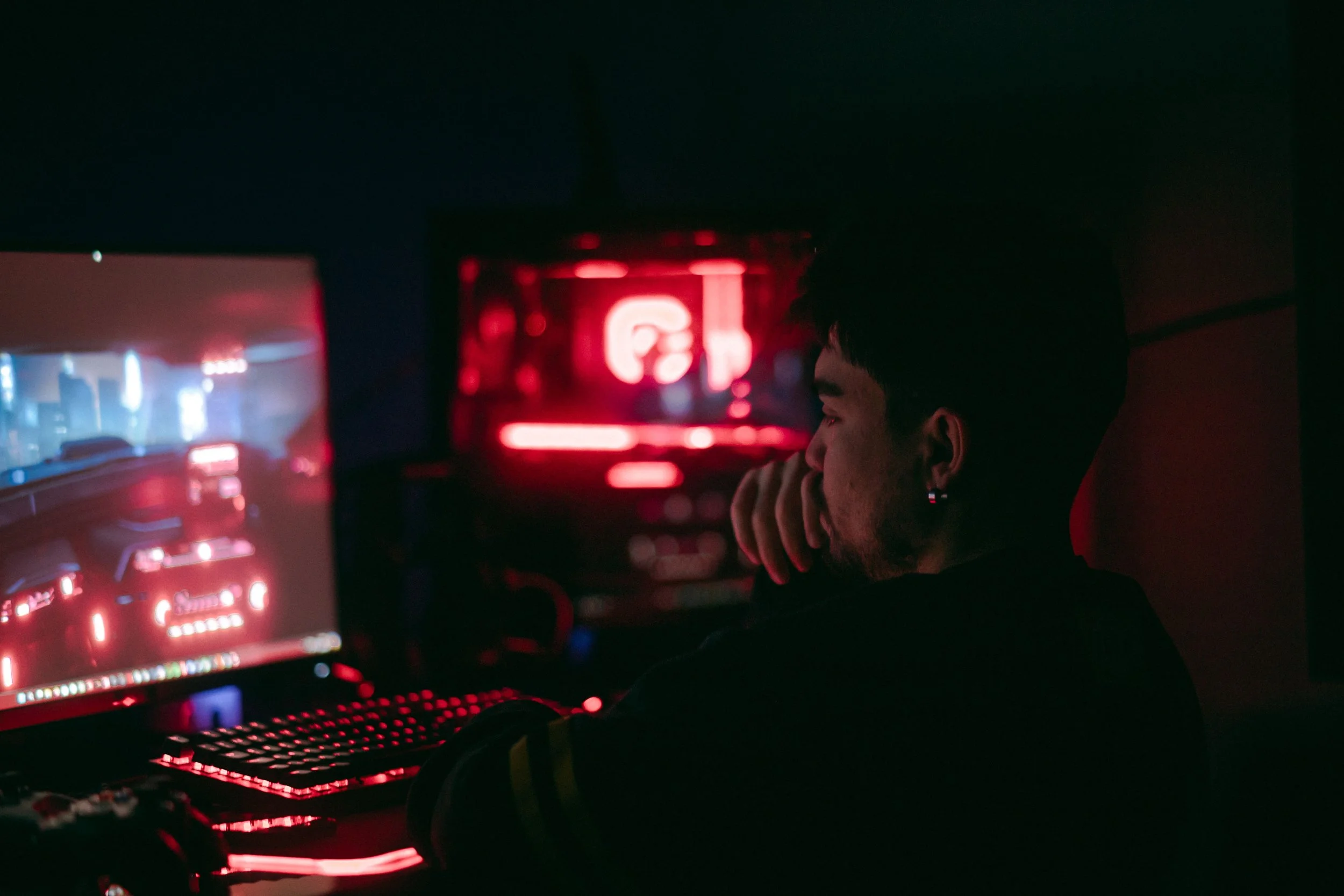
Gaming is one of the most common leisure activities among college students, and one of the most frequently misunderstood from a mental health perspective. The conversation around gaming and mental health tends to treat all gaming as potentially problematic, which is neither accurate nor useful. Gaming is not the problem. What gaming is used to do is what matters, and understanding that distinction is what allows for an honest assessment of whether your relationship with gaming is working for you or against you.
When gaming provides genuine recreation, social connection, a sense of competence and mastery, or low-stakes creative engagement, it is doing what healthy leisure activity should do. When gaming primarily functions as a way to avoid the things that actually need to be addressed, anxiety, loneliness, academic pressure, depression, it stops being recreation and becomes a coping strategy with costs that accumulate invisibly.
At Semester Health, gaming that has crossed from recreation into avoidance comes up regularly in sessions with college students, usually embedded in larger patterns of anxiety or depression. Here is what to look for.
What the Research Says
Gaming disorder was formally recognized by the World Health Organization in 2019. A 2024 review of gaming and mental health in college students found that problematic gaming is associated with higher rates of depression, anxiety, and social isolation, with the relationship running in both directions: gaming can contribute to mental health difficulties and mental health difficulties drive gaming as a coping mechanism.
The research also consistently finds that time spent gaming is a less reliable predictor of harm than the function gaming is serving. A student who games four hours per day as part of a healthy social life and maintains their academic and self-care responsibilities is in a fundamentally different situation than a student who games two hours per day to avoid the anxiety of an approaching deadline or the loneliness of a disconnected campus life. Duration matters less than function and impact.
Gaming as Recreation vs Gaming as Avoidance
The distinguishing question is not how much you game. It is what happens when you stop. And what the gaming is replacing.
Do you game because it is genuinely enjoyable and you make deliberate choices about when to play, or do you find yourself gaming automatically when you are anxious, bored, or overwhelmed?
Does gaming refresh you or does it function more as a way to be unconscious for a while?
Have you noticed gaming expanding to fill time that was previously spent on things you valued, studying, exercising, seeing people, sleeping?
Do you feel worse about yourself or your life after extended gaming sessions, or do you feel better?
Have you tried to cut back and found it significantly harder than you expected?
Avoidance-based gaming has a specific quality: it does not actually produce relief. You game for three hours and still feel the anxiety or the loneliness or the dread underneath it. The game occupies your attention without addressing the thing that was driving you to it. When you stop, the original feeling is still there, sometimes amplified by guilt or shame about the time spent.
Gaming is not the problem. The anxiety, depression, or loneliness you are gaming to avoid is the problem. Addressing the gaming without addressing what it is functioning as a response to rarely produces lasting change.
When to Take It Seriously
Problematic gaming is worth taking seriously when:
It is consistently affecting academic performance through missed deadlines, skipped classes, or inability to concentrate
Sleep is being significantly compromised by gaming hours
Social relationships are deteriorating because gaming is taking priority
You feel genuinely unable to control the amount of time you spend gaming despite negative consequences
Gaming is the primary way you manage anxiety or low mood, and you notice it is not actually helping
What Actually Helps
Address what the gaming is responding to
If gaming is primarily avoidance of anxiety, depression, loneliness, or academic pressure, the most effective intervention is addressing those underlying conditions directly. Reducing gaming without treating the anxiety that drives it either fails because the pull is too strong or succeeds in reducing gaming while leaving the underlying problem to express itself in a different way.
Create structural limits rather than willpower limits
Deciding to game less through willpower is significantly less effective than structural changes. Gaming-free hours before certain times, keeping gaming setup out of the study space, scheduled breaks rather than open-ended sessions, and specific ending criteria all reduce the automatic nature of avoidance gaming without requiring ongoing willpower expenditure.
Replace rather than just restrict
Gaming often fills a genuine need for competence, mastery, social connection, or low-stakes engagement that has no other outlet in campus life. Identifying what need gaming is meeting and finding alternative ways to meet it, through clubs, sports, creative activities, or social opportunities, tends to reduce the pull toward gaming more effectively than restriction alone.
If gaming has become a primary way of managing anxiety, depression, or avoidance in your college life, Semester Health offers therapy that addresses the underlying patterns rather than just the behavior.
Frequently Asked Questions
Is gaming bad for mental health?
Not inherently. Gaming can provide genuine recreation, social connection, and stress relief when used intentionally. It becomes problematic when it primarily functions as avoidance of things that need to be addressed, when it impairs academic or social functioning, or when it is driven by and reinforcing underlying anxiety or depression.
How many hours of gaming per week is too much?
Duration is less important than function and impact. A student gaming fifteen hours per week in a healthy social context with stable academics is in a different situation than one gaming five hours per week to avoid overwhelming anxiety. Impact on functioning and what the gaming is replacing are more meaningful indicators than hours.
Can gaming disorder be treated?
Yes. Gaming disorder is addressed in the same way as other behavioral addictions: by treating the underlying mental health conditions driving the behavior, developing alternative coping strategies, and building structural limits. CBT is the most commonly used evidence-based approach.
What if gaming is my main social outlet?
Online gaming communities and multiplayer gaming can provide genuine social connection, which is valuable. If gaming is your only social outlet and you are otherwise isolated, building in-person connection alongside rather than instead of gaming is worth prioritizing.
How do I tell my parents that gaming is actually not the problem?
The conversation is often more productive if you acknowledge the behavior they are concerned about while providing context about what is actually driving it. Saying I know the gaming has been a lot and I think it is partly because I have been struggling with anxiety tends to get further than a defensive response about gaming itself.
Can therapy help with gaming problems?
Yes, particularly when the goal is addressing the anxiety, depression, or avoidance that gaming is functioning as a response to. Therapy that focuses only on the gaming behavior without addressing what is underneath it tends to produce less durable results.
