
You and Your Roommate Are Not Getting Along. Here Is How to Handle It Without Losing Your Mind.
Why roommate conflict is harder than most people expect, how to navigate it effectively, and when it becomes a mental health issue worth addressing.
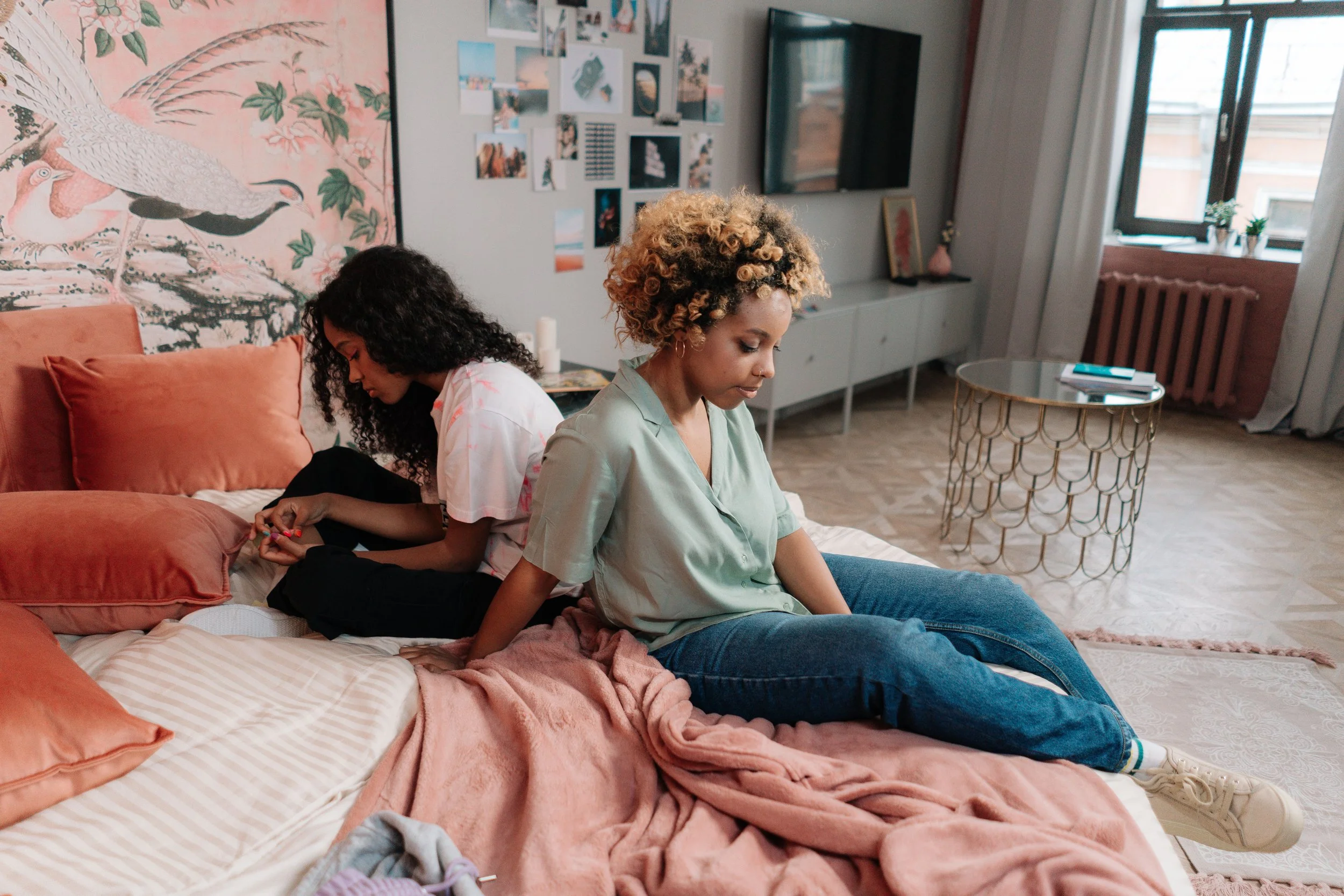
You cannot avoid them. You cannot fire them. You share a room that is smaller than most living rooms with someone you met two months ago, and something has gone wrong between you. Maybe it is the noise, the mess, the sleep schedule, the guests. Maybe there was a conversation that went badly. Maybe there was no conversation at all and the silence has become its own problem. Whatever it is, you are now navigating something that most people have no training for: conflict with someone you cannot get away from.
Roommate conflict is one of the most consistently reported stressors in college, and one of the least talked about in mental health terms. It affects sleep, concentration, the ability to use your own room as a place to recover, and the general sense of having any safe space on campus. When it goes unresolved, it can affect everything else.
At Semester Health, roommate conflict comes up regularly in therapy with college students, often as part of a larger picture of anxiety, sleep problems, and difficulty concentrating. Here is how to approach it in a way that actually works.
Why Roommate Conflict Is Harder Than Regular Conflict
Most conflict can be managed with distance. With a roommate, distance is not available. You will see them tonight. You will be in the same room when you go to sleep. You will encounter the evidence of their habits every time you walk through the door. That unavoidability changes the stakes significantly and removes the natural circuit breaker that distance provides in most conflict situations.
College is also a developmental period when most people are still learning how to navigate conflict at all. Many students grew up in environments where conflict was either avoided entirely, resolved through someone else's intervention, or handled in ways that were not particularly constructive. The roommate situation is often the first sustained close-quarters conflict that requires you to manage entirely on your own, without a parent to step in or the option to simply not show up.
The 2024 to 2025 Healthy Minds Study found that interpersonal difficulties and relationship stress are among the most commonly reported contributors to poor mental health in college students. Roommate conflict, as one of the most sustained and unavoidable interpersonal stressors in campus life, is a direct contributor to that picture.
What Makes Roommate Conflict Worse
Passive aggression instead of direct communication
The most common response to roommate friction is passive aggression: leaving pointed notes, responding coldly, complaining to mutual friends rather than the person directly. Passive aggression provides momentary relief from the frustration while systematically making the underlying situation worse. The roommate either does not receive the message clearly, receives it and becomes defensive, or the dynamic escalates into something that is harder to repair than the original issue would have been.
Waiting for it to blow over
Unaddressed roommate conflict rarely resolves on its own. More often it calcifies into a dynamic where both people are avoiding each other, both are increasingly resentful, and the original issue is now buried under months of accumulated tension. The longer it goes without being addressed, the harder the conversation becomes and the more entrenched the dynamic.
Making it an all-or-nothing situation
Treating a specific conflict as evidence that you and your roommate are fundamentally incompatible as people, or escalating immediately to requesting a room change, short-circuits the possibility of a workable resolution. Most roommate conflicts are about specific behaviors and specific incompatibilities that are negotiable, not about fundamental character incompatibility.
What Actually Works
Have the direct conversation sooner rather than later
The conversation is almost always less terrible than the anticipation of it. Choosing a neutral time, not during or immediately after a conflict, being specific about the behavior rather than characterizing the person, and approaching it as a problem to solve rather than a case to make, produces significantly better outcomes than avoidance. Something like I have been finding the noise at night hard to sleep through and I wanted to talk about it directly is a complete opener.
Be specific about what you need, not just what is wrong
Telling your roommate that something bothers you without saying what you need instead is half a conversation. What specific change would actually work for you? What are you willing to compromise on? Coming in with a specific and reasonable ask is more productive than a general complaint.
Use your RA when appropriate
Resident advisors exist specifically to help with roommate conflict. Using them as a resource for mediation or documentation is not snitching. It is using the support structure your housing program built for exactly this purpose. If the conflict has escalated beyond what a direct conversation can resolve, involving your RA is the appropriate next step.
Recognize when it is affecting your mental health
If roommate conflict is affecting your sleep, your ability to use your room as a recovery space, your concentration, or your overall mental health significantly, that is worth addressing both in terms of the conflict and in terms of the mental health impact. A therapist can help you navigate both the conflict itself and the anxiety or stress it is generating.
If a roommate situation is significantly affecting your mental health and daily functioning, Semester Health offers therapy for college students that addresses the interpersonal dynamics and the mental health impact together.
Frequently Asked Questions
How do I bring up a conflict with my roommate without it becoming a fight?
Choose a neutral time, not during or immediately after the problem behavior. Be specific about the behavior, not the person. Lead with what you need rather than just what is wrong. Keep it focused on one issue at a time.
What if my roommate refuses to talk about it?
Involve your RA. That is what they are there for. Attempting to document your own outreach, including a brief message saying you would like to talk, is useful if it escalates to formal housing intervention.
Is it okay to request a room change?
Yes. If the conflict is genuinely irresolvable or if the situation is significantly affecting your mental health, requesting a room change is a reasonable and available option. Most housing offices require documentation that you attempted to resolve the conflict first.
What if I feel anxious about confronting my roommate?
That is extremely common and worth paying attention to. Anxiety about direct conflict is one of the most common patterns therapy addresses. A therapist can help you prepare for the conversation and work on the underlying anxiety about interpersonal conflict more broadly.
My roommate and I had a falling out and now we just coexist in silence. Is that okay?
Functional coexistence is better than active conflict, but a room where you feel consistently tense or uncomfortable affects your sleep, your recovery, and your mental health. If the silence has become its own stressor, it is worth addressing.
Can roommate conflict cause or worsen anxiety or depression?
Yes. Sustained interpersonal conflict in your primary living environment is a significant and chronic stressor. It disrupts sleep, creates constant low-level threat activation, and reduces your sense of having a safe space to recover. All of these directly affect mental health.
What if I am the one who caused the conflict?
Owning it directly and specifically is the most effective repair. I realize I have been doing this and I can see how it has been affecting you, followed by a concrete change you are committing to, is a complete and respectful approach. A therapist can help you develop the self-awareness and communication skills to handle this kind of situation.
