
Pulling All-Nighters Isn't a Grind. It's a Mental Health Risk.
What sleep deprivation actually does to your mental health, your grades, and your brain, and why college culture has it completely backwards
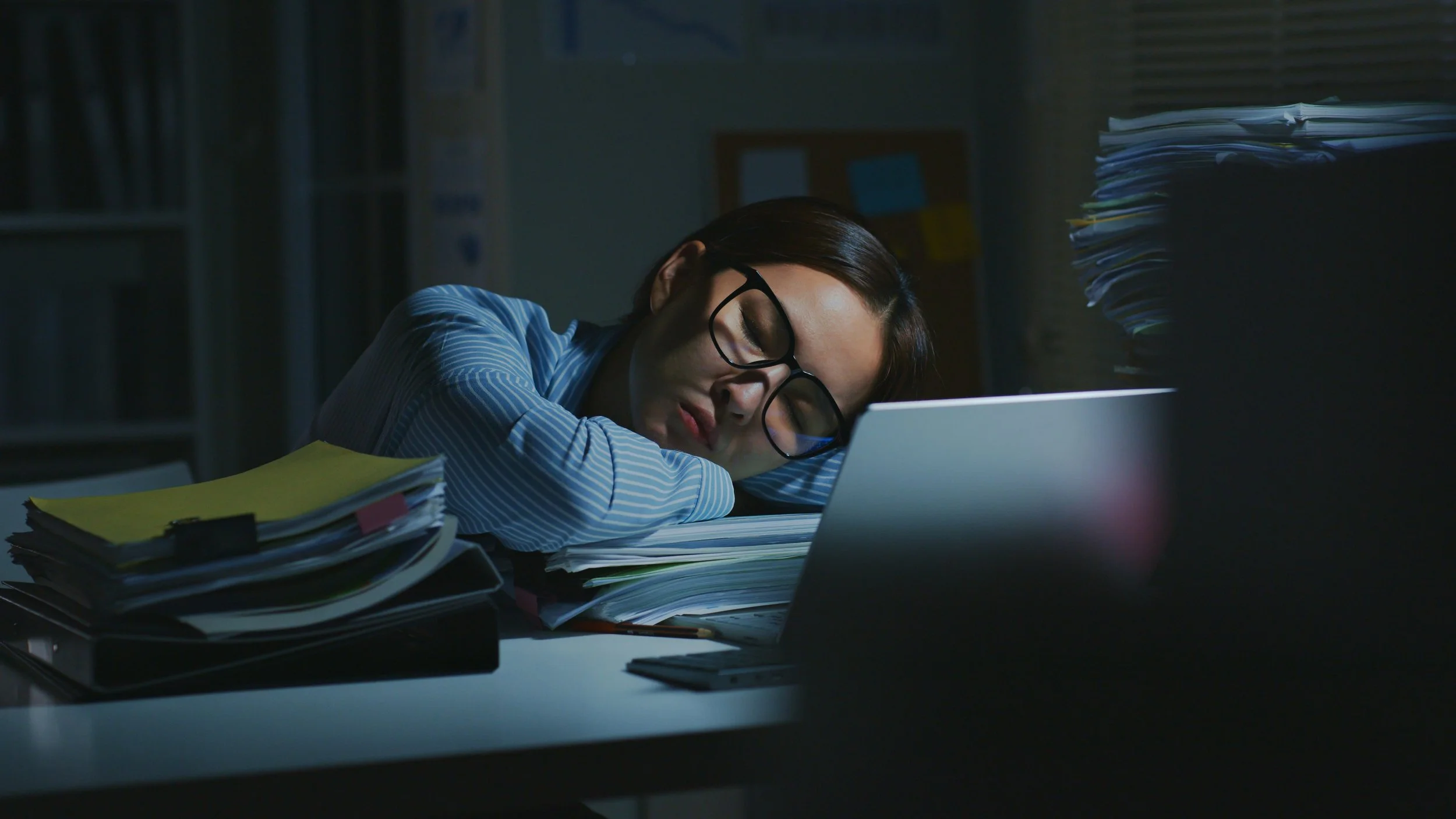
There is a version of college success that gets glamorized constantly: sleeping four hours, grinding until sunrise, running on caffeine and willpower. It gets called hustle. It gets called dedication. What it actually is, according to a growing body of research, is one of the most reliable ways to drive anxiety, worsen depression, tank your GPA, and make everything harder than it needs to be.
Sleep and mental health in college students are more tightly connected than most students realize, and the consequences of getting this wrong compound quickly. If you have been running on fumes and wondering why everything feels heavier than it should, this might be the most important thing you read this semester. And if you are finding that anxiety or low mood is persisting despite trying to manage it, Semester Health offers therapy built specifically for college students navigating exactly this.
How Bad Is the Sleep Problem on College Campuses?
Worse than most students think. A 2025 study published by the American College Health Association found that 74.3% of college students qualified as poor sleepers based on standardized sleep quality indices. A separate finding from the same report showed that 62% of students are currently at risk for clinically significant sleep disorders or related issues. The average college student gets between 6 and 6.9 hours of sleep per night, well below the 8 hours recommended for this age group. And students pull an average of 2.7 all-nighters per month.
These are not edge case statistics. Three quarters of the students on your campus are not sleeping well. The student next to you in lecture running on their third coffee of the morning is the norm, not the exception. And the cost of that collective sleep deprivation is enormous and largely invisible because it is so normalized.
[Insert image: infographic showing college student sleep statistics and recommended hours]
What Sleep Deprivation Actually Does to Your Brain
Sleep is not passive downtime. It is when your brain consolidates memories, processes emotional experiences, clears metabolic waste, and restores the neurochemical balance that regulates mood, attention, and decision-making. When you cut sleep short, all of that work gets interrupted.
Here is what the research shows happens after even one night of poor sleep:
Memory consolidation is disrupted, meaning information studied the night before is less effectively retained
The prefrontal cortex, which handles planning, impulse control, and rational decision-making, becomes less active
The amygdala, which processes threat and emotional reactivity, becomes more reactive and harder to regulate
Reaction time, concentration, and cognitive flexibility all decline measurably
Mood regulation deteriorates, making emotional responses more intense and harder to recover from
After 24 hours without sleep, cognitive impairment becomes comparable to a blood alcohol concentration of 0.10%, which is above the legal driving limit in most states. You would not take an exam drunk. But pulling an all-nighter and walking into a morning exam produces a similar level of functional impairment.
The Sleep-Anxiety Loop
Sleep and anxiety have a bidirectional relationship, which means each one directly worsens the other. Anxiety makes it harder to fall asleep and stay asleep. Poor sleep makes the nervous system more reactive and less equipped to regulate anxiety. The result is a loop that many college students find themselves stuck in without fully understanding why.
Poor sleep raises anxiety. Higher anxiety disrupts sleep further. The loop tightens. And the student in the middle of it often concludes that they just have anxiety, without recognizing that their sleep is actively driving it.
Research consistently shows that people with insomnia are between 10 and 17 times more likely to experience clinically significant levels of depression and anxiety than those who sleep well. That is not a small effect. For students who are already managing stress, that multiplier is significant.
The anxious brain at bedtime is a recognizable experience for most college students: you lie down, and suddenly every unfinished task, every social worry, every upcoming deadline comes flooding in. That is your nervous system doing exactly what chronic sleep deprivation trains it to do: stay vigilant, stay activated, stay ready for threat. The solution is not more willpower at bedtime. It is addressing both the sleep and the anxiety together.
If anxiety is keeping you awake, or poor sleep is making your anxiety worse, talking to a therapist can help you break the cycle. Book a session with a Semester Health therapist.
Sleep Deprivation and Depression
The relationship between sleep and depression is just as direct as the one with anxiety. Disrupted sleep is both a symptom and a cause of depression, and for college students it can be genuinely difficult to tell which came first.
What we know is that chronic poor sleep significantly increases the risk of developing depressive symptoms, and that treating sleep often produces meaningful improvements in mood even before other interventions are introduced. Sleep deprivation suppresses the production of serotonin and dopamine, disrupts cortisol regulation, and impairs the emotional processing that normally happens during REM sleep, all of which directly contribute to low mood, loss of motivation, and the kind of emotional flatness that is easy to mistake for general life dissatisfaction.
If you have been feeling persistently low, unmotivated, or disconnected and you are also sleeping poorly, the sleep is not a separate issue. It is part of the same picture and worth addressing directly.
Why All-Nighters Backfire Academically
The core irony of the all-nighter is that it is usually done in service of academic performance, and it reliably undermines the academic performance it is meant to protect.
Here is what actually happens when you study through the night and then take an exam the next morning. The information you reviewed during the all-nighter was never consolidated into long-term memory because consolidation requires sleep. You walk into the exam with a fatigued prefrontal cortex that processes information more slowly and retrieves it less reliably. And the stress of the situation activates an amygdala that is already dysregulated from sleep loss, making test anxiety worse than it would otherwise be.
Research shows that every hour of sleep lost below eight hours is associated with a decrease of approximately 0.07 GPA points. Chronic sleep deprivation increases the likelihood of failing or withdrawing from a course by 12%. Students who regularly pull all-nighters have lower GPAs than those who do not, across the board. The all-nighter feels productive in the moment. The data says otherwise.
What Is Actually Keeping You Awake
For most college students, poor sleep is not primarily a sleep problem. It is a stress problem, an anxiety problem, a phone problem, or a schedule problem that shows up as sleep disruption. Understanding what is actually driving the poor sleep changes what the solution looks like.
Anxiety and racing thoughts
When your nervous system is chronically activated by academic pressure, social stress, or unprocessed worry, it does not reliably shut down at bedtime. Cognitive arousal at night is one of the most common drivers of insomnia in college students and is directly treatable.
Irregular schedules and social jet lag
Sleeping until noon on weekends and having to be up at 8am on Monday creates a version of jet lag that disrupts your circadian rhythm every single week. Your body clock cannot regulate sleep pressure effectively when the sleep and wake schedule varies by three or more hours across the week.
Screen use before bed
Blue light suppresses melatonin production and delays sleep onset. But beyond the blue light, the emotional activation from scrolling, checking notifications, and processing social information at bedtime keeps the brain in an alert state that is incompatible with sleep. The phone is not a neutral wind-down tool.
Caffeine timing
Caffeine has a half-life of five to seven hours, meaning a coffee at 4pm still has half its stimulant effect at 9 or 10pm. Many students who report difficulty falling asleep are also consuming caffeine in the afternoon without connecting the two.
Practical Sleep Strategies That Work
These are not tips to try once and abandon. They are habits that require consistency to produce results, but the results are real and relatively fast:
Anchor your wake time first
Trying to fix bedtime first rarely works because you cannot force sleep. Fixing wake time does work because it builds sleep pressure across the day that makes falling asleep easier at night. Pick a consistent wake time and hold it even on weekends. This is the single highest-leverage sleep intervention for most people.
Create a wind-down window
Your nervous system needs a transition period between the stimulation of the day and sleep. Thirty to sixty minutes of genuinely low-stimulation activity before bed, reading something light, a short walk, a shower, anything that is not a screen or a stressful task, helps signal to your brain that it is safe to shift into sleep mode.
Cut caffeine after 2pm
This adjustment alone improves sleep onset for many students within a week. It feels difficult for the first few days as the afternoon energy dip becomes more noticeable, and then the body adjusts and sleep quality improves.
Get out of bed if you cannot sleep
Lying in bed awake for extended periods trains your brain to associate the bed with wakefulness rather than sleep. If you have been awake for 20 minutes or more and sleep is not coming, get up and do something low-stimulus in low light until you feel genuinely sleepy, then return to bed. This is a core principle of CBT for insomnia and one of the most evidence-supported behavioral sleep interventions available.
When to Get Support
If sleep problems have been persistent for more than a few weeks, or if they are significantly affecting your mood, focus, or ability to function, that is worth addressing with professional support. Cognitive Behavioral Therapy for Insomnia, known as CBT-I, is the most well-researched treatment for chronic sleep problems and is significantly more effective than sleep medication for long-term outcomes. Many therapists who work with college students are trained in CBT-I or can integrate sleep work into broader anxiety or depression treatment.
Sleep problems and mental health problems are deeply interconnected. Treating one without addressing the other rarely produces lasting change. A therapist who understands this can help you address both together.
If sleep deprivation has been affecting your mental health, your grades, or your quality of life and you are not sure where to start, Semester Health works specifically with college students on anxiety, depression, and the habits that sustain them, including sleep. Virtual sessions, flexible scheduling, designed for your reality.
Frequently Asked Questions
How much sleep do college students actually need?
Most research points to 7 to 9 hours per night for optimal cognitive and emotional functioning in young adults. Consistently getting less than 6 hours produces measurable declines in mood, memory, and academic performance.
Do all-nighters actually help you study?
No. Research consistently shows that all-nighters impair memory consolidation, reduce cognitive function, and worsen test performance. The material you study during an all-nighter is less effectively retained than material reviewed with adequate sleep before and after.
Can poor sleep cause anxiety?
Yes. Sleep deprivation increases amygdala reactivity and reduces the prefrontal cortex's ability to regulate emotional responses, which directly increases anxiety. People with insomnia are up to 17 times more likely to experience clinically significant anxiety than those who sleep well.
Why do I feel anxious at bedtime even when I am tired?
This is a very common pattern. When the nervous system has been chronically activated during the day by academic or social stress, it does not reliably down-regulate at bedtime. Cognitive arousal at night is one of the most treatable forms of insomnia, often addressed through CBT-I and anxiety work.
Is it okay to catch up on sleep on weekends?
Partially. You can partially recover cognitive performance with weekend sleep. But the irregular schedule itself disrupts your circadian rhythm in a way that makes weekday sleep harder. Consistency is more protective than catching up.
What is CBT-I and does it work for students?
CBT-I stands for Cognitive Behavioral Therapy for Insomnia. It is the most evidence-supported treatment for chronic sleep problems and works by changing the behaviors and thought patterns that maintain insomnia. It is significantly more effective than sleep medication for long-term outcomes and works well for students.
Can therapy help with sleep problems?
Yes. If anxiety or depression is driving your sleep problems, treating those directly often improves sleep significantly. A therapist trained in CBT-I can also address the sleep problem specifically. The two approaches are often combined for students dealing with both anxiety and insomnia.
