
Stress-related concernBurnout
Constantly pushing through — academically, socially, or both — eventually catches up with you. Burnout is real, common in college students, and recoverable. Get support from therapists who understand the specific way it shows up in student life.

Most students with insurance pay a $25 average copay. No insurance? Sessions start at $110.






What is burnout?
Burnout is a state of physical and emotional exhaustion caused by prolonged stress, marked by fatigue, cynicism or detachment, and a drop in your sense of effectiveness. It's not just being tired — it's a deeper depletion that doesn't resolve with a weekend of rest.
How it affects college students
Burnout in college students often builds quietly — a semester of back-to-back deadlines, part-time work, extracurriculars, and social obligations, with no real recovery time in between. It can look like losing motivation for classes you used to enjoy, feeling numb or checked out, or physically running on empty even after sleeping. Left unaddressed, burnout often develops into or overlaps with depression and anxiety.

Our treatment approach
Our therapists help you understand what's actually driving your burnout — overcommitment, perfectionism, lack of boundaries — and build a sustainable way forward, not just a quick fix before the next deadline. This is talk-therapy-led care, with medication management available if depression or anxiety symptoms are also present.
How Semester Health works
Getting started at Semester health is easy and personalized.
Book a free 15-minute consult
Tell us a little about yourself — no pressure, no commitment. Just a conversation.
Meet your provider
Connect with a licensed therapist or psychiatric provider via video or in person in Texas.
Attend regular sessions
Flexible, personalized care tailored to your life and your semester.

The people behind your care
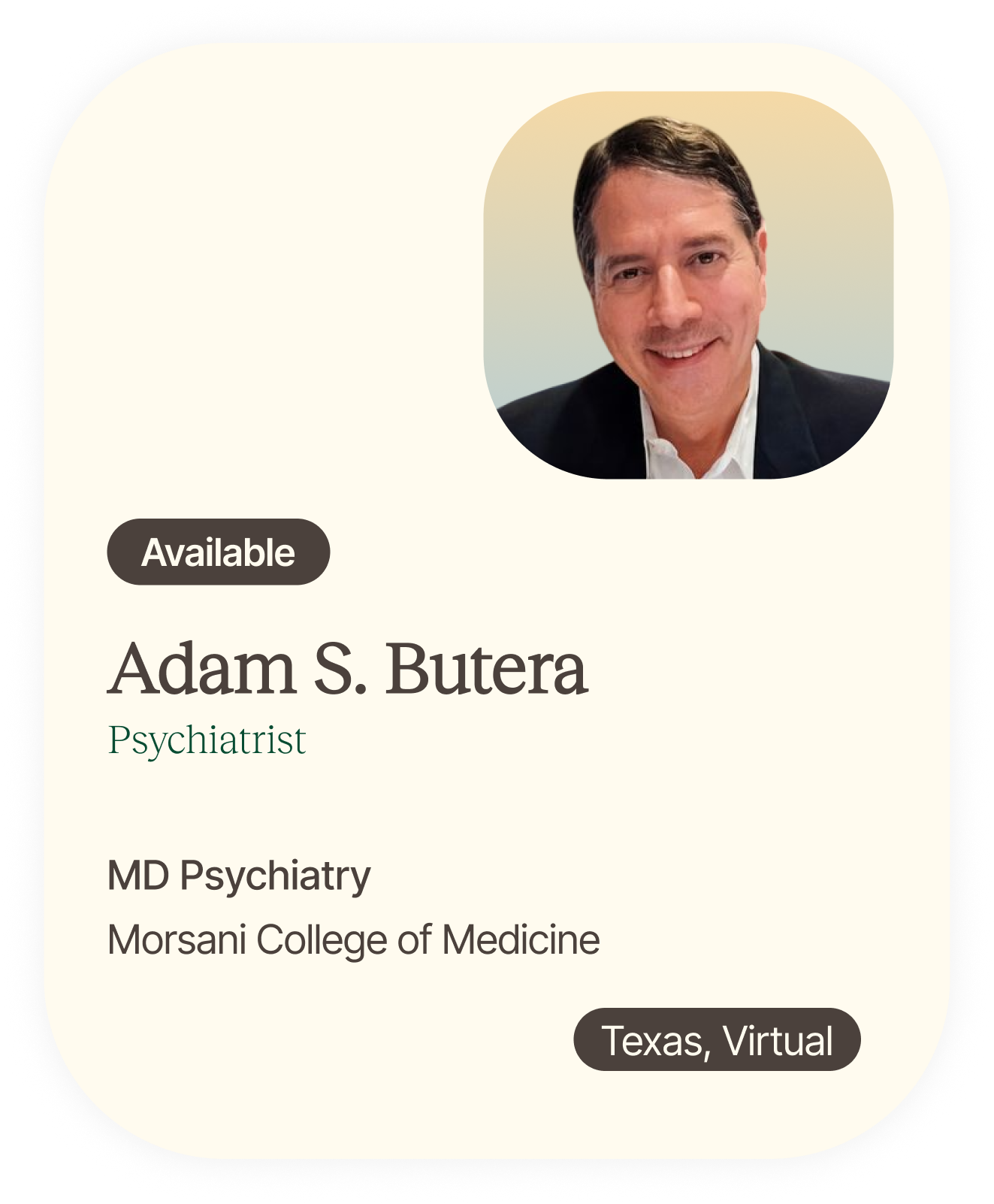
We connect you with a carefully curated network of psychiatrists vetted for clinical excellence and exceptional patient experience. With a wide range of specialties, backgrounds, and approaches, you’ll find a provider who understands your individual needs and can create a medication management plan tailored to you.

Your insurance questions, answered.
-
Burnout doesn't resolve with rest the way ordinary tiredness does — it involves a deeper exhaustion, along with cynicism or detachment and a drop in your sense of effectiveness, that builds over time.
-
Yes, unaddressed burnout can develop into or overlap significantly with depression, which is part of why early support matters.
-
No — burnout in college students often comes from a combination of academics, work, extracurriculars, and social obligations, all stacking on top of each other.
-
Real recovery usually involves addressing the underlying patterns — overcommitment, difficulty setting boundaries, perfectionism — not just taking a short break and going right back to the same pace.
-
No — earlier support is often more effective and quicker than waiting until you're at a breaking point.
-
Yes, burnout is closely connected to both, and treatment often addresses them together.
-
Yes, sessions are HIPAA-compliant and confidential.
-
Yes — evaluation and medication management are available virtually anywhere in Texas, or in person in Austin and Houston.