
The Waitlist at Your Campus Counseling Center Is Weeks Long. Here's What to Do Instead.
Campus counseling vs. private therapy: a real comparison for college students who need support now
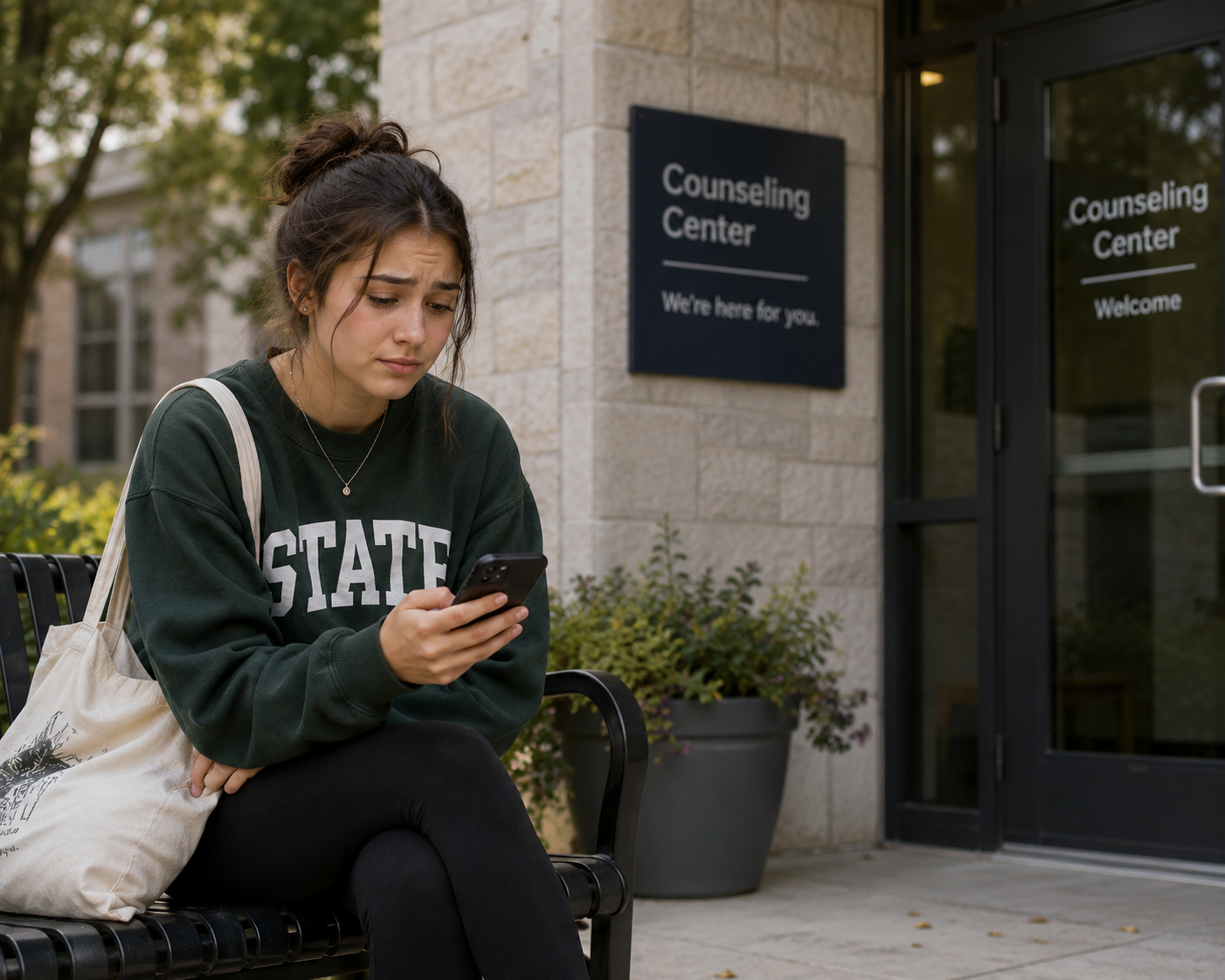
It is finals season. You have been feeling off for weeks, maybe longer. You finally decide to do something about it and look up your campus counseling center. And then you see it: the wait for a first appointment is one to two weeks, sometimes longer. If you are at a larger school during a high-demand period, it can stretch further than that. So now what?
The good news is that your campus counseling center is not your only option. Practices like Semester Health, which specialize in therapy for college students, exist precisely for moments like this. Understanding the difference between what campus counseling offers and what a private therapist offers will help you make a faster, better decision about your care.
Why Campus Counseling Centers Are Overwhelmed
This is not a knock on the people working at campus counseling centers. Most of them are doing genuinely good work under genuinely difficult conditions. The problem is structural.
According to the Association for University and College Counseling Center Directors, the average wait time for a first therapy appointment at college counseling centers is between one and two weeks, and that is under normal conditions. During peak periods like midterms, finals, or early fall when new students are adjusting, waits can push significantly longer. Some campuses have reported backlogs of six to eight weeks.
The core issue is that demand for college counseling center vs private therapy has shifted dramatically. Counseling center utilization has increased 20 to 30% since 2020, but staffing has not kept pace. The average university has roughly one counselor for every 1,700 students, well below the recommended ratio of one per 1,000 to 1,500 students. The math simply does not work in students' favor.
What Your Campus Counseling Center Is Good For
Despite the limitations, campus counseling centers offer real value in specific situations. Here is where they genuinely shine:
Crisis support
Most campus counseling centers have same-day or next-day crisis appointments available even when the regular waitlist is long. If you are in acute distress, experiencing suicidal thoughts, or in the middle of a mental health emergency, your campus counseling center is designed to respond quickly. Do not let the general waitlist stop you from reaching out when things are urgent.
Free or very low cost access
Campus counseling is usually covered by your student health fees, meaning there is no per-session cost. If you are paying for college and money is genuinely tight, this matters. Free access to a licensed clinician, even with some limitations, is still valuable.
Short-term support for situational stress
If you are going through a hard patch, a breakup, a rough semester, a difficult family situation, and you need a few sessions to process and get back on track, campus counseling centers are well-suited for this. They are built for short-term, focused support.
Referrals and navigation
Campus counselors are often excellent at connecting you to other resources, whether that is a psychiatrist for medication, a support group, academic accommodations, or a specialist in the community. Even if the direct counseling is limited, the navigation support can be genuinely useful.
Where Campus Counseling Centers Fall Short
Knowing the limitations helps you plan around them. Here is where campus counseling centers consistently struggle:
Session limits
Most campus counseling centers cap the number of sessions you can receive per semester or per year, typically somewhere between six and twelve. If you are dealing with something more complex, like ongoing anxiety, depression, trauma, or identity struggles, that is not enough time to do meaningful work. You will likely be referred out mid-process, which disrupts continuity of care at exactly the wrong moment.
Limited therapist selection
At most campus counseling centers, you are assigned a therapist rather than choosing one. Therapeutic fit is one of the strongest predictors of whether therapy actually works, and not having any say in who you see is a real limitation. If the fit is poor, navigating a change can be slow and awkward.
Confidentiality concerns on a small campus
This one does not apply everywhere, but at smaller schools, running into your campus therapist at the dining hall or in a shared class is a genuine possibility. For some students, that proximity makes it harder to open up fully, even when confidentiality is legally protected.
Scheduling rigidity
Campus counseling centers typically operate during business hours, which often conflicts directly with the class schedules they exist to support. Evening, weekend, and flexible scheduling options are limited at most schools.
Not sure if campus counseling is enough for what you are dealing with? Semester Health offers flexible, private therapy designed specifically for college students. See how Semester Health works.
What Private Therapy Offers Instead
Private therapy, including virtual practices like Semester Health that specialize in college students, addresses most of the structural gaps that campus counseling centers cannot fill:
No session limits
Private therapy does not cut you off after six sessions. If you are working through something significant, you can continue at whatever pace and duration makes sense for you. That consistency is often what makes the difference between surface-level coping and real, lasting change.
You choose your therapist
Finding the right fit matters enormously. With private therapy, you can review therapist profiles, read about their approach and areas of focus, and make an informed choice about who you want to work with. If it does not feel right after a few sessions, switching is straightforward.
Flexible scheduling
Virtual private therapy can fit around your actual schedule, including evenings, weekends, and between classes. You are not limited to the 9 to 5 window that most campus offices operate in.
Specialization
Campus counselors are generalists by necessity. Private therapists often specialize in specific areas, anxiety, depression, trauma, identity, academic stress, and that specialization can make the work more targeted and more effective for what you are specifically dealing with.

How to Choose Based on What You Actually Need
Here is a simple way to think about it:
Use your campus counseling center if:
You are in crisis and need same-day support
You need two or three sessions to process something specific and situational
Cost is a genuine barrier and free access is the priority
You want a referral or connection to other campus resources
Consider private therapy if:
You have been struggling for more than a few weeks and need more than short-term support
You want to choose your own therapist and have continuity over time
Your schedule makes daytime campus appointments difficult
You are dealing with something specific, like anxiety, depression, or trauma, that benefits from a specialized approach
You have tried campus counseling and it was not the right fit
The two are not mutually exclusive either. Some students use their campus counseling center for crisis support or short-term needs while seeing a private therapist for ongoing work. Use whatever combination actually gets you the care you need.
A Note on Cost
Cost is a real consideration and worth addressing directly. Campus counseling is typically free or very low cost. Private therapy varies, but many private therapists and practices accept insurance, which brings the per-session cost down significantly.
At Semester Health, sessions are designed to be accessible for college students, with insurance accepted and straightforward pricing. If cost has been the reason you have been putting off getting support, it is worth checking what your student insurance actually covers before assuming private therapy is out of reach.
Frequently Asked Questions
Is campus counseling confidential?
Yes. Campus counseling centers are bound by the same confidentiality laws as private therapists. The narrow exceptions are the same: imminent risk of harm to yourself or others. Your sessions are not shared with academic staff, your professors, your parents, or your financial aid office.
What if the campus counseling waitlist is too long?
If you need support sooner than the waitlist allows, private therapy, including virtual options, is the most practical alternative. Many virtual practices can schedule a first appointment within a few days.
Can I use both campus counseling and a private therapist at the same time?
Yes. Some students do exactly this, using campus services for crisis support or group programming while working with a private therapist for ongoing individual sessions. There is no rule against it.
How many sessions does campus counseling usually allow?
Most campus counseling centers allow somewhere between six and twelve sessions per year. The exact limit varies by school. If you need ongoing care beyond that, you will typically be referred to an outside provider.
Is virtual private therapy as effective as in-person?
Research consistently shows that virtual therapy produces comparable outcomes to in-person sessions. For college students in particular, the flexibility and privacy of virtual sessions often makes it easier to actually show up consistently, which is one of the strongest predictors of good outcomes.
Does my student insurance cover private therapy?
Many student health insurance plans do cover mental health services, including private therapy. The easiest way to find out is to call the number on the back of your insurance card or check your plan details online. Semester Health accepts insurance and can help you verify coverage.
What if I tried campus counseling and it did not help?
That is more common than you might think, and it does not mean therapy will not help you. It may mean the fit was not right, the session limit was too restrictive, or you need a more specialized approach. Private therapy gives you more control over finding something that actually works.
