
You Can Have 500 Followers and Still Feel Completely Alone at College
Why loneliness in college is more common than anyone admits, and what to actually do about it
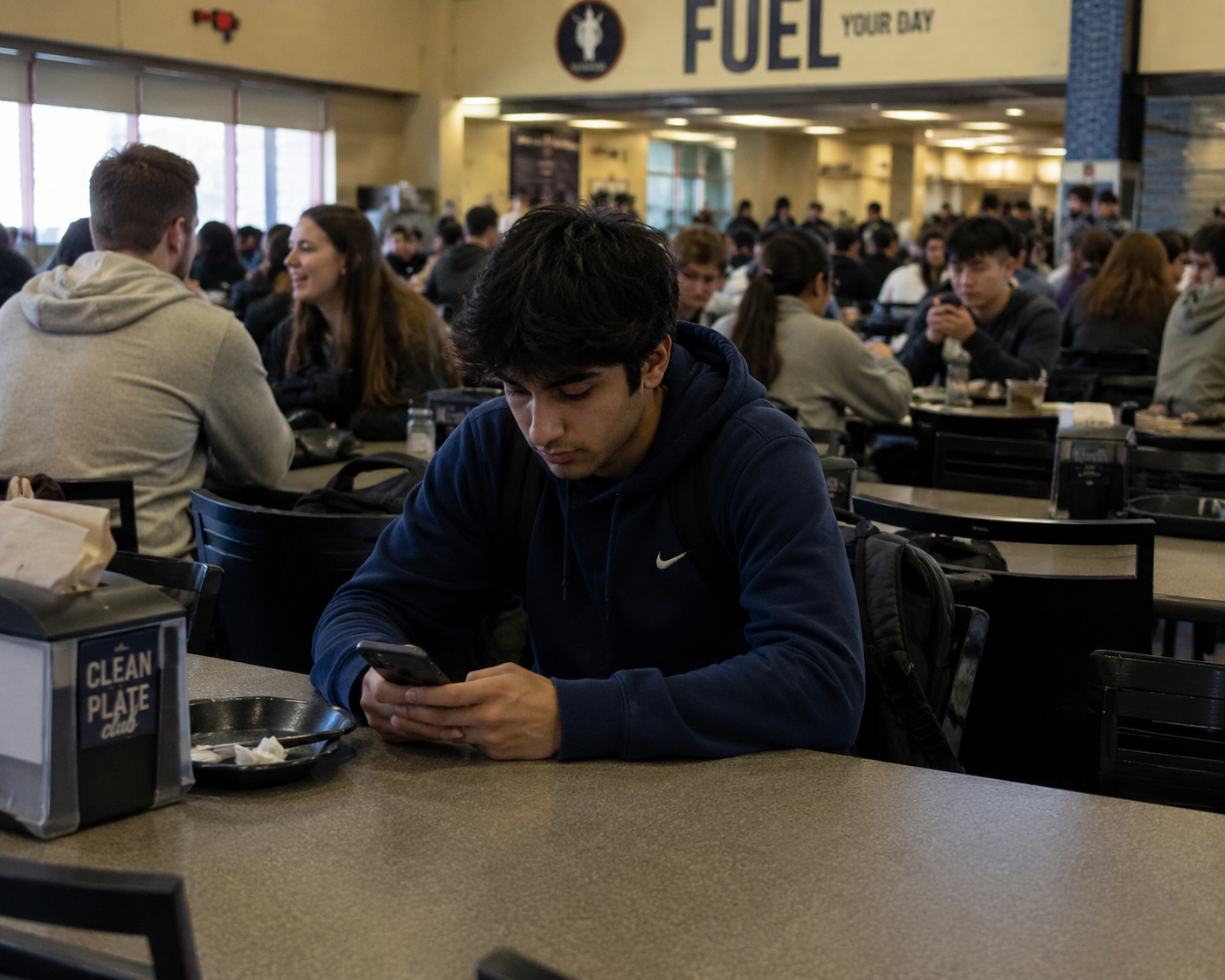
You are sitting in a dining hall full of noise, surrounded by people laughing and talking. Your dorm floor has dozens of people. Your classes are packed. And yet, somewhere underneath all of it, you feel completely alone. If that sounds familiar, you are not broken and you are not the only one.
Loneliness in college students is one of the most common and least talked about mental health struggles on campus today.
This blog breaks down why it happens, why it is more serious than people realize, and what actually helps.
The Numbers Are Bigger Than You Think
Here is something that might surprise you: nearly two thirds of college students report feeling lonely, according to a 2024 survey of over 1,100 students conducted by Active Minds. A separate Trellis Strategies report based on nearly 44,000 students found that 57% felt lonely, with 12% saying they feel that way always. Just 15% said they never feel lonely.
The 2024 to 2025 Healthy Minds Study, which tracked over 84,000 students across 135 universities, found that 52% of college students reported high levels of loneliness, down slightly from 58% in 2022 but still more than half of the entire student population. And students who feel lonely are over four times more likely to experience severe psychological distress, according to the Active Minds data.
This is not a niche problem. It is one of the most widespread experiences in higher education right now, and most students dealing with it think they are the only one.
Why College Feels Lonely Even When It Should Not
College is supposed to be the time of your life. So why does loneliness in college students show up so persistently? There are a few things happening at once.
You lost your entire social network overnight
When you left for college, you did not just change locations. You left behind the friendships, routines, and social structures that took years to build. Your high school friend group, your neighborhood, your family. All of it was disrupted at once. Rebuilding that kind of social foundation from scratch takes real time, often more than a semester, and that gap in the middle is where loneliness lives.
Being around people is not the same as feeling connected
College campuses are full of surface-level interaction. You say hi to people in the hall, sit next to someone in lecture, make small talk in the elevator. But those fleeting interactions do not create the kind of deep, mutual connection that actually fights loneliness. Meaningful relationships require time, vulnerability, and repeated contact. None of those happen automatically just because you share a zip code with thousands of people.
Everyone looks like they have it figured out
One of the cruelest parts of college loneliness is how invisible it is. Everyone around you looks confident and socially sorted. They seem to already have their people. What you cannot see is that a huge portion of them are feeling exactly what you are feeling, and performing the same confidence you are performing. The loneliness is widespread and silent at the same time.
The transition itself is destabilizing
Research from Ohio State University found that loneliness at the start of a semester predicts more loneliness mid-semester and lower feelings of belonging later on. In other words, if the transition is hard early, it tends to compound. First-generation college students face this especially acutely. A Gallup-Lumina Foundation report found that first-generation students are 30% more likely to feel isolated during their first year compared to continuing-generation peers.
Feeling disconnected and not sure what to do about it? Talking to a therapist can help you figure out what is going on and how to move forward. Connect with a therapist at Semester Health.
How Social Media Makes It Worse
Here is the cruel irony of loneliness in college students today: the tool most students reach for when they feel alone is the one most likely to make it worse.
A 2025 study published in the Journal of American College Health analyzed data from nearly 65,000 students aged 18 to 24 across more than 120 colleges. It found that spending just 16 hours a week on social media, just over two hours a day, was linked with significantly higher odds of loneliness. Researchers suspect the relationship runs in both directions: lonely students turn to social media for connection, and heavy social media use crowds out the in-person interaction that actually helps.
The mechanism makes sense when you think about it. Social media shows you everyone else's curated highlight reel: the friend groups, the parties, the adventures, the belonging. You compare that edited performance to your behind-the-scenes reality. The gap between the two feeds the feeling that everyone else has figured out college except you.
You are not watching other people's real life. You are watching their best moments, carefully selected and posted for maximum effect. Your loneliness is real. Their feeds are not.
This does not mean deleting every app. It means being honest with yourself about whether scrolling is making you feel better or worse, and making intentional choices about where you put your time and attention.
Why Loneliness Is a Mental Health Issue, Not Just a Social One
College loneliness is not just uncomfortable. It has real consequences for mental health and physical health that most students do not know about.
The Active Minds and TimelyCare data found that students who feel lonely are more than four times as likely to experience severe psychological distress. Loneliness is also associated with higher rates of anxiety, depression, and substance use. A Boston University study of over 84,000 students found that lonely students had higher odds of benzodiazepine, marijuana, stimulant, and opioid misuse compared to students who did not feel lonely.
The long-term stakes are real too. Research consistently links chronic loneliness with increased risk of depression, and some studies have connected it to higher rates of early mortality. The U.S. Surgeon General declared loneliness a public health epidemic in 2023, specifically citing young people as among the most affected.
None of this is meant to scare you. It is meant to reframe the way you think about what you are experiencing. If you have been dismissing your loneliness as no big deal, or something you just need to push through, it is worth taking more seriously.

What Actually Helps
The research on what reduces loneliness in college students points pretty clearly in one direction: in-person, repeated contact. Not events, not apps, not more followers. Actual face-to-face time with real people.
Prioritize quality over quantity
You do not need a large friend group. You need one or two people you can be honest with. Focus your energy on deepening a small number of connections rather than trying to know everyone. Vulnerability and consistency are what build real relationships, not the number of people you sit with at lunch.
Show up repeatedly to the same places
Connection happens through repeated, low-stakes contact. The same study session spot every week. The same club meeting. The same pickup game. Familiarity builds comfort, and comfort builds the conditions for actual friendship. You do not have to be charismatic. You just have to keep showing up.
Put your phone away in social settings
This one is unglamorous but it works. When you are with other people, even in a shared study space or a class, making eye contact and being present creates the conditions for real connection. Scrolling signals unavailability, even when you do not mean it that way.
Do not wait to feel ready
A lot of students wait until they feel less anxious, more confident, or more socially settled before putting themselves out there. That moment rarely comes on its own. The confidence comes after you act, not before. Reaching out, starting the conversation, joining the thing you have been thinking about joining: those actions create the feeling, not the other way around.
When to Talk to Someone
Sometimes loneliness is a situational response to a hard transition, and it lifts on its own as you settle in. But sometimes it is persistent, heavy, and connected to deeper things: social anxiety, depression, a history of feeling like you do not belong, difficulty trusting people. When loneliness is affecting your sleep, your ability to focus, your motivation, or the way you feel about yourself, that is worth talking to a professional about.
Therapy is not just for crisis moments. It is genuinely useful for working through the kind of disconnection and self-doubt that keeps loneliness going long after it should have resolved.
Semester Health works specifically with college students navigating exactly this kind of thing. If you have been feeling isolated and are not sure what to do next, reaching out is a good place to start.
Frequently Asked Questions
Is it normal to feel lonely in college?
Yes, and it is far more common than most students realize. Research consistently shows that more than half of college students experience loneliness. The fact that it feels isolating does not mean you are the only one going through it.
Why do I feel lonely even when I am surrounded by people?
Being around people is not the same as feeling connected to them. Meaningful connection requires time, vulnerability, and repeated contact. Surface-level interaction, which makes up most of college social life early on, does not fill that need.
How long does college loneliness usually last?
For many students it improves as they settle in and build relationships, often by the second semester or second year. If it has been persisting for a long time or is getting worse, that is a sign it may be connected to something deeper worth addressing.
Can social anxiety make loneliness worse?
Yes. Social anxiety makes it harder to initiate contact, tolerate the discomfort of new interactions, and show up consistently in social settings. Treating the anxiety often has a direct positive effect on loneliness. A therapist can help with both.
Does social media actually make loneliness worse?
Research suggests it can, especially heavy use. Spending more than two hours a day on social media has been linked to higher odds of loneliness in college students. Comparing your real experience to other people's highlight reels makes genuine connection harder to appreciate.
What is the fastest way to make real friends in college?
Show up repeatedly to the same places and invest in a small number of connections rather than trying to meet everyone. Friendship is built through consistent contact and gradual vulnerability, not a single big social event.
When should I consider therapy for loneliness?
If your loneliness has been persistent for more than a few months, is affecting your mood or sleep, or feels connected to deeper patterns like social anxiety or low self-worth, therapy is a genuinely useful next step, not a last resort.
