
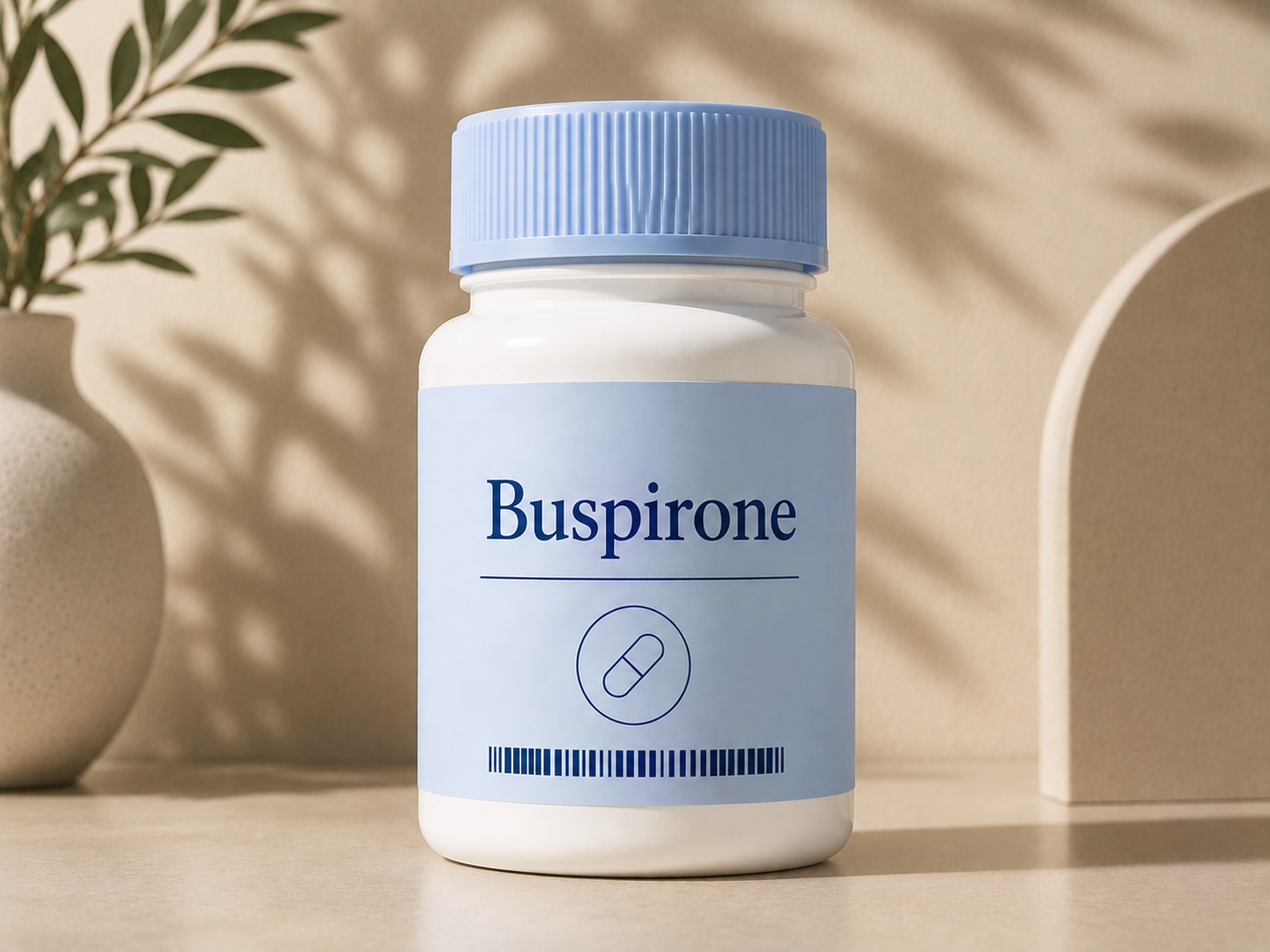
Buspar
(Buspirone)
Buspar is a non-benzodiazepine anxiolytic used for generalised anxiety disorder. Unlike benzodiazepines, it is not habit-forming, does not cause sedation, and does not interact with alcohol — making it a safer long-term option for chronic anxiety.
Most students with insurance pay a $25 average copay. No insurance? Sessions start at $110.






Buspar works differently from other anxiety medications — its active ingredient, buspirone, acts on serotonin and dopamine receptors rather than GABA. This means it does not produce the immediate calming effect of a benzodiazepine, but with consistent use over a few weeks it effectively reduces chronic anxiety without risk of dependence.
How Semester Health works:
Getting started at Semester health is easy and personalized.
Book a free 15-minute consult
Tell us a little about yourself — no pressure, no commitment. Just a conversation.
Meet your provider
Connect with a licensed therapist or psychiatric provider via video or in person in Texas.
Attend regular sessions
Flexible, personalized care tailored to your life and your semester.

The people behind your care
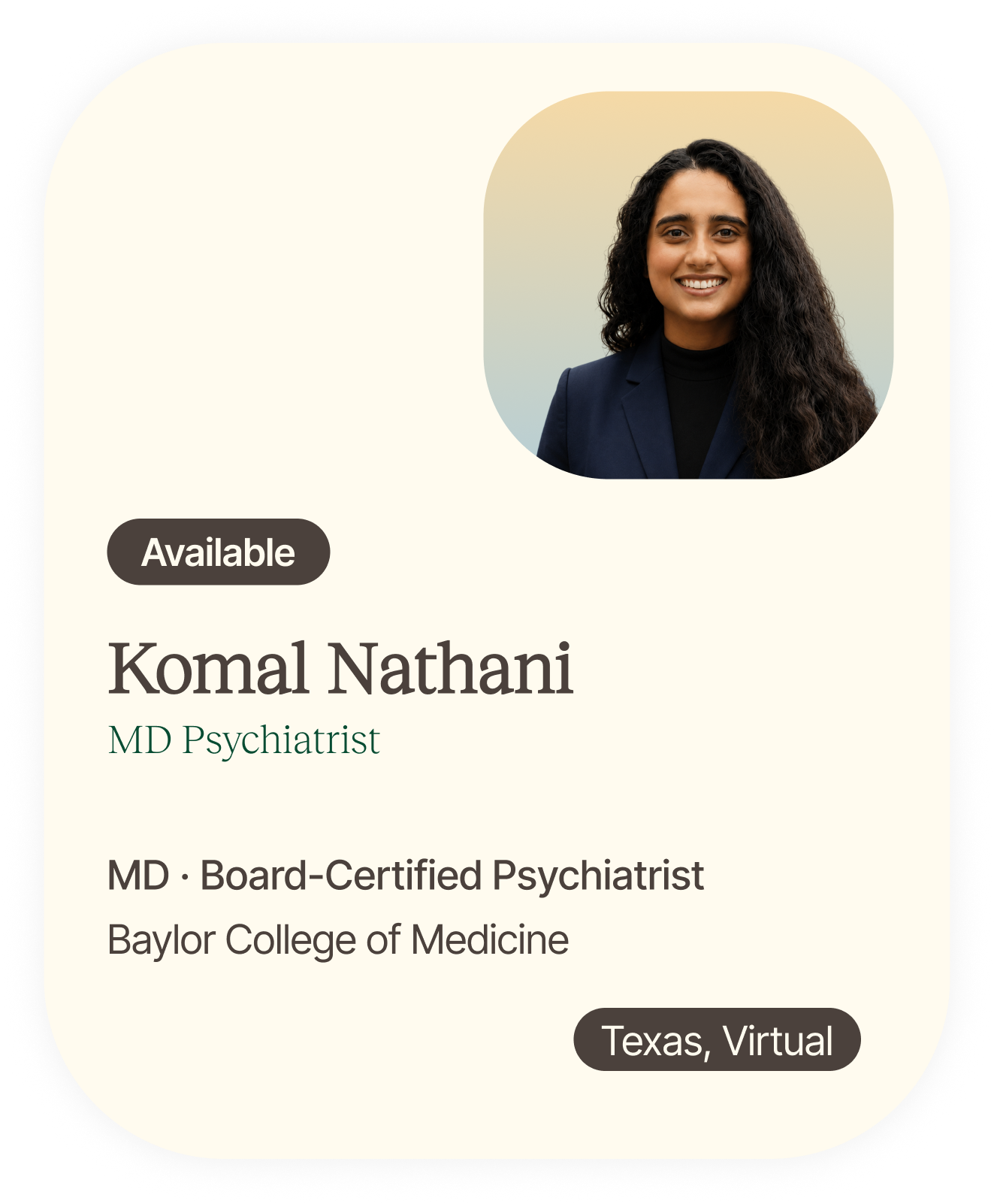
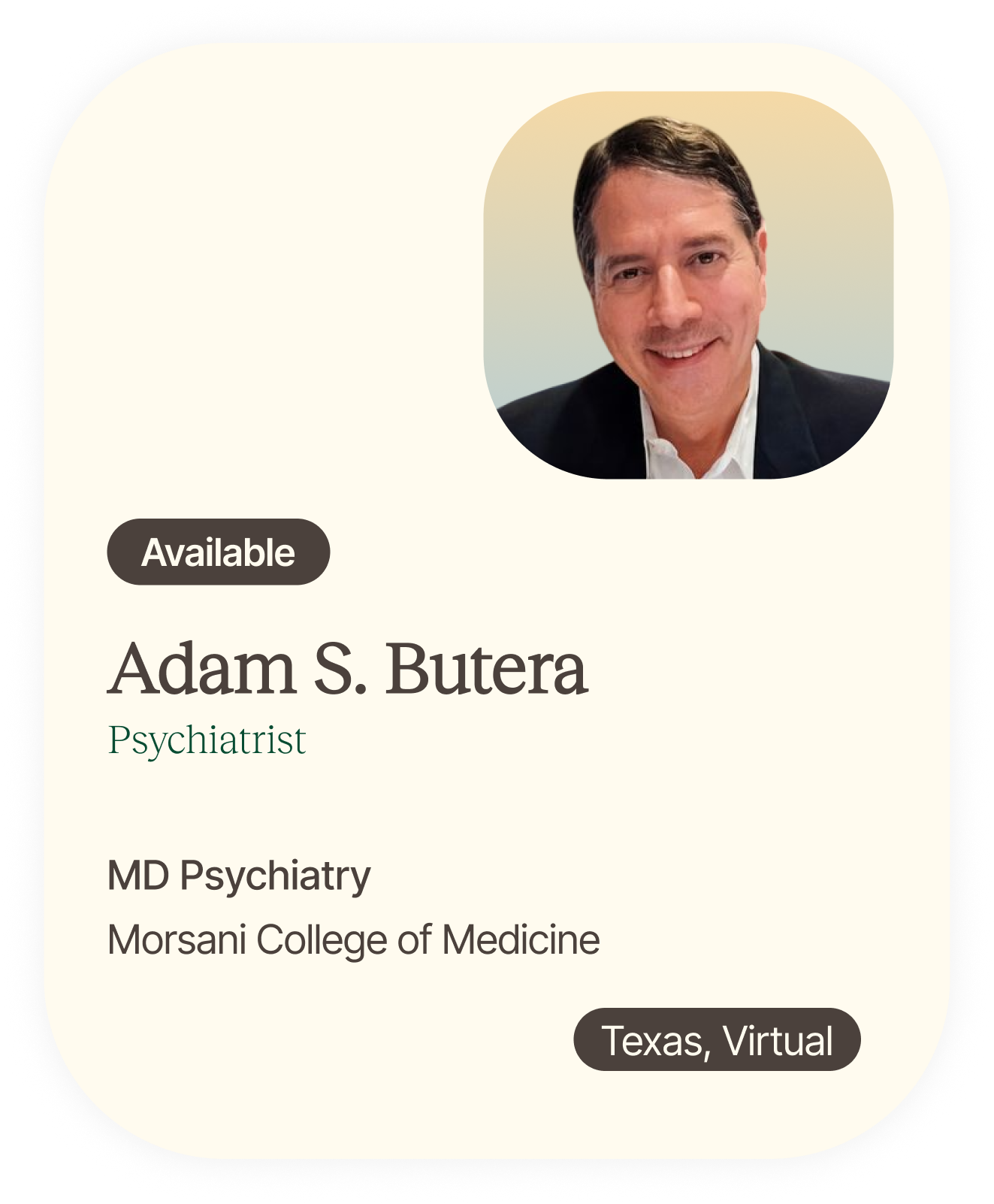
We connect you with a carefully curated network of psychiatrists vetted for clinical excellence and exceptional patient experience. With a wide range of specialties, backgrounds, and approaches, you’ll find a provider who understands your individual needs and can create a medication management plan tailored to you.
Your insurance questions, answered.
-
Buspar (buspirone) is FDA-approved for generalised anxiety disorder (GAD). It is sometimes added to antidepressants to boost their effect on anxiety.
-
No — this is one of Buspar's key advantages. Unlike benzodiazepines, it does not cause physical dependence, tolerance, or withdrawal.
-
No. Buspar requires consistent daily use for 2–4 weeks before its anti-anxiety effects become apparent. It is not suitable as a rescue medication for acute anxiety.
-
Dizziness, headache, nausea, and nervousness are the most common, especially in the first week or two.
-
Yes — Buspar is frequently combined with SSRIs or SNRIs to enhance anxiety relief. Your psychiatrist will manage the combination carefully to avoid serotonin syndrome.
-
Benzodiazepines work immediately and powerfully but carry risk of dependence and sedation. Buspar is slower-acting but non-addictive, non-sedating, and suitable for long-term daily use.
-
Buspar does not cause withdrawal, so stopping is generally smoother than with benzodiazepines. Still, consult your psychiatrist before making any changes.
-
Book a free consult at Semester Health. Our psychiatrists will assess whether Buspar is the right approach for your anxiety.