
Seroquel
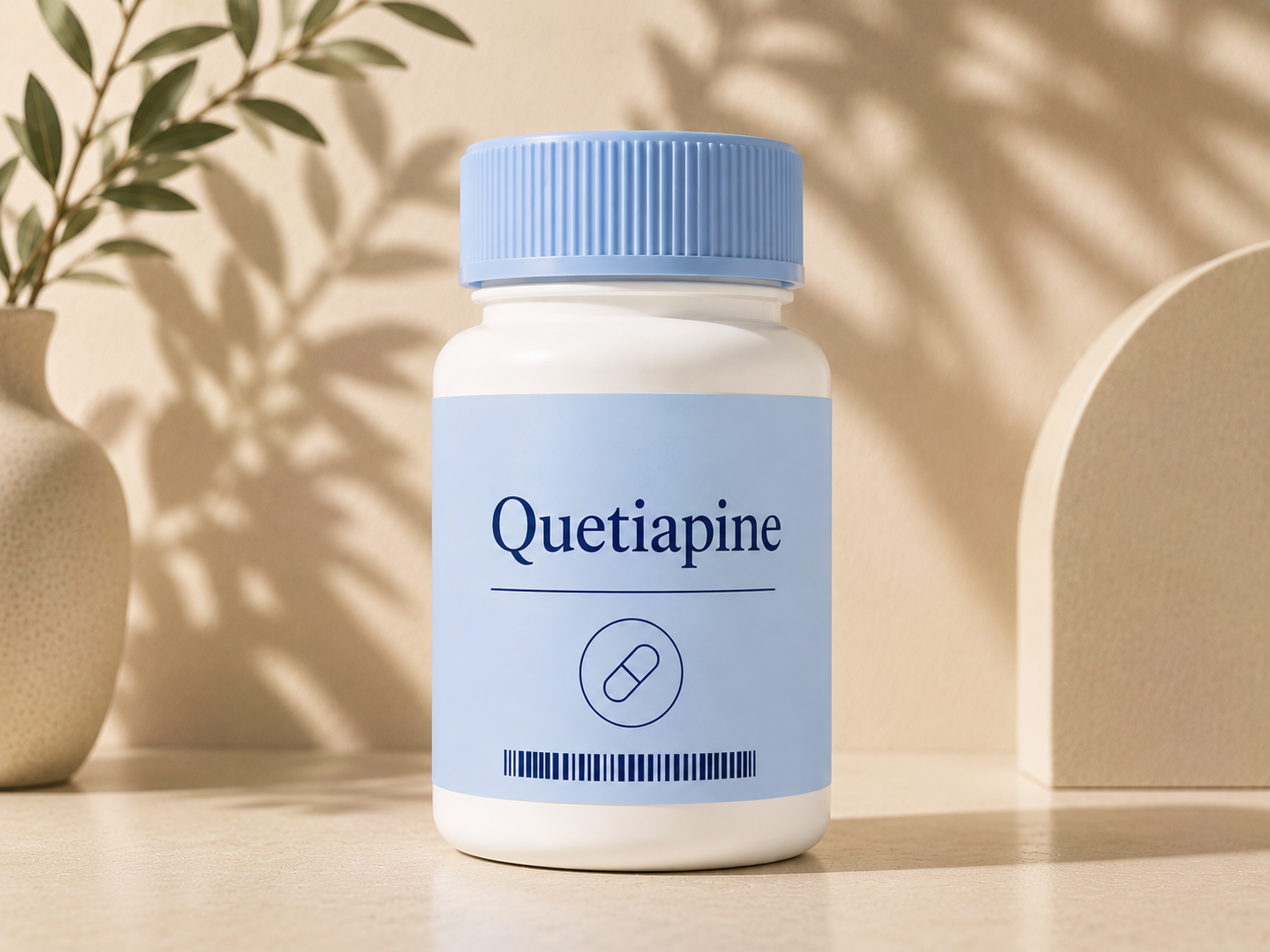
(Quetiapine)
Seroquel is an atypical antipsychotic used to treat bipolar disorder, schizophrenia, and major depression as an add-on. At lower doses it is also commonly prescribed for sleep and anxiety, though these are off-label uses.
Most students with insurance pay a $25 average copay. No insurance? Sessions start at $110.






Seroquel works by affecting dopamine and serotonin receptors in the brain. Its active ingredient, quetiapine, is a versatile medication used across a spectrum of psychiatric conditions and is often added to an antidepressant when a first medication alone is not providing full relief.
How Semester Health works
Getting started at Semester health is easy and personalized.
Book a free 15-minute consult
Tell us a little about yourself — no pressure, no commitment. Just a conversation.
Meet your provider
Connect with a licensed therapist or psychiatric provider via video or in person in Texas.
Attend regular sessions
Flexible, personalized care tailored to your life and your semester.

The people behind your care
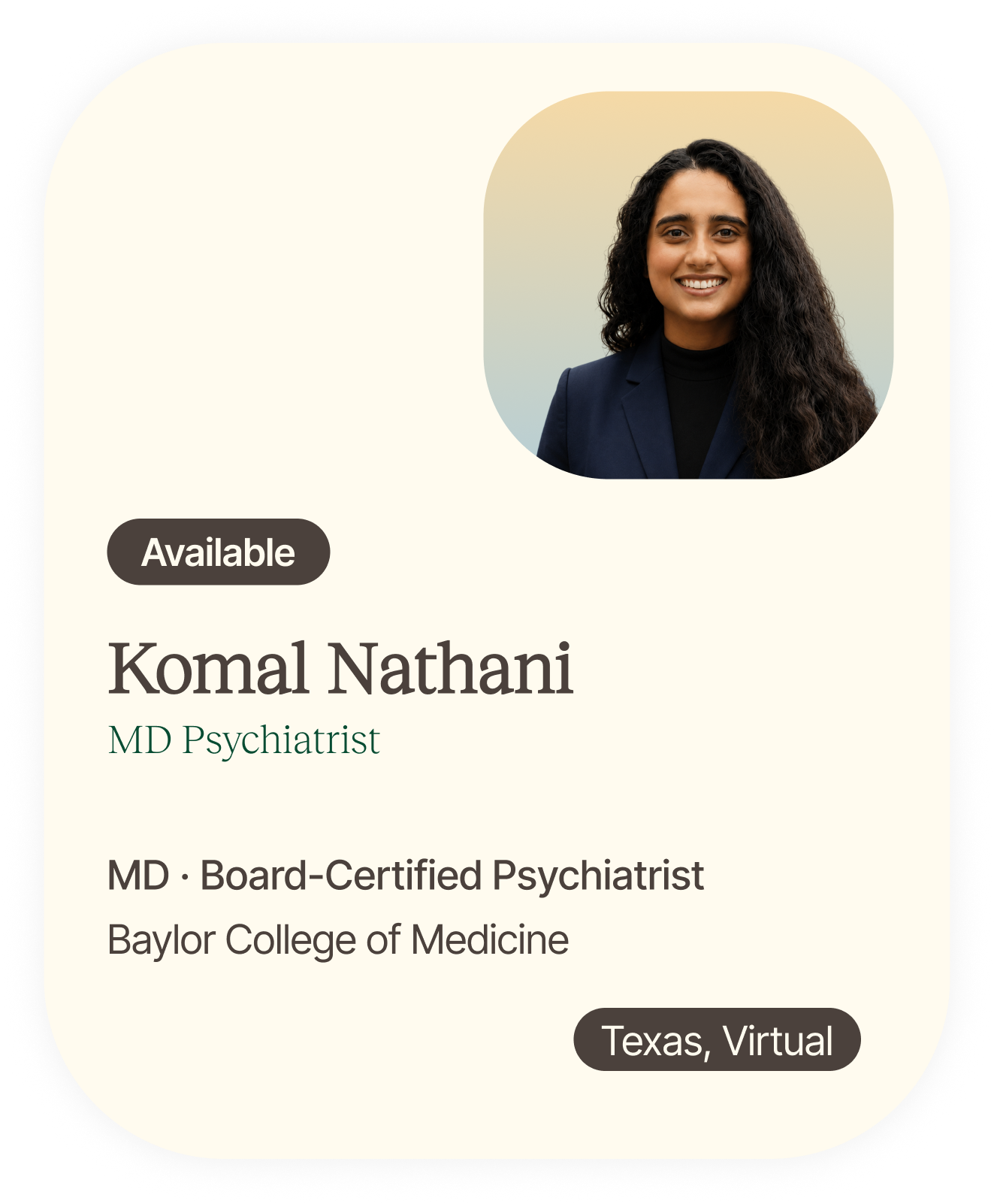
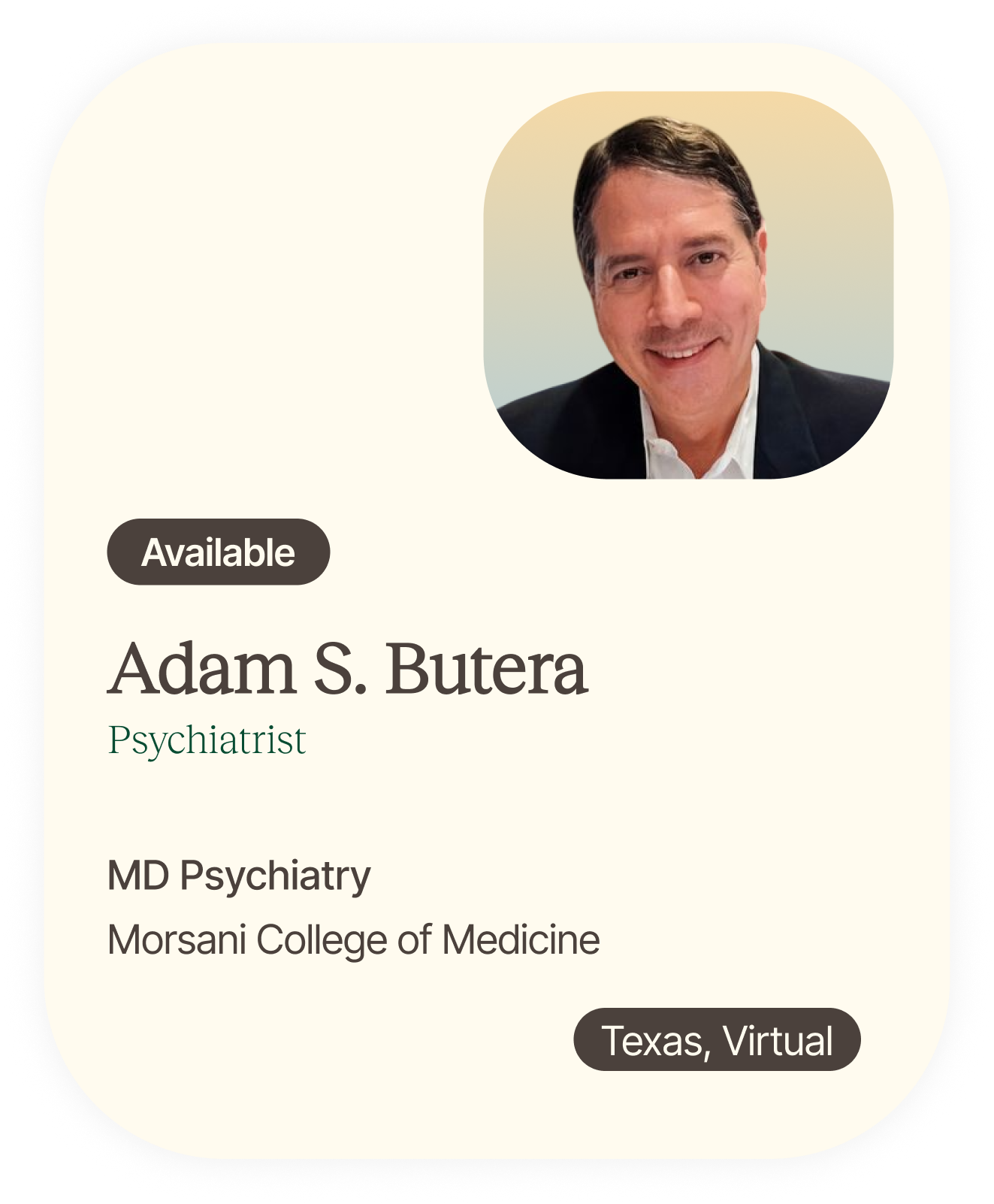
We connect you with a carefully curated network of psychiatrists vetted for clinical excellence and exceptional patient experience. With a wide range of specialties, backgrounds, and approaches, you’ll find a provider who understands your individual needs and can create a medication management plan tailored to you.
Your insurance questions, answered.
-
Seroquel (quetiapine) is FDA-approved for schizophrenia, bipolar disorder (manic and depressive episodes), and as an add-on for major depression. At low doses it is frequently used off-label for insomnia and anxiety.
-
At low doses (25–100mg), Seroquel has a sedating effect. While not FDA-approved for this purpose, psychiatrists sometimes prescribe it short-term for insomnia when other medications have not worked.
-
Sedation, weight gain, dry mouth, constipation, and dizziness are common. Metabolic changes (blood sugar, cholesterol) should be monitored with long-term use.
-
It can — particularly at higher doses. Your psychiatrist will monitor your weight and metabolic health and may recommend dietary adjustments.
-
Seroquel is not considered addictive in the way benzodiazepines are, but it should not be stopped abruptly — withdrawal symptoms such as insomnia and nausea can occur.
-
Yes, many people take it long-term safely. Regular monitoring of metabolic markers (glucose, cholesterol, weight) is important.
-
For sleep and acute mania, effects are usually felt quickly. For depression and anxiety, improvement typically takes 2–4 weeks.
-
Book a free consult at Semeter Health. Our psychiatrists will assess your full history and determine whether Seroquel is appropriate for your needs.